
Belize has nice weather, good soil, and lots of fish in rivers and the ocean, like the Belize Barrier Reef. This made many people live here during the time of the ancient Maya. They built big cities with hundreds of thousands of people. They used the Belize River as a superhighway to move things around and connect with big cities in Guatemala. The strong cities in Belize traded with places like Tikal that were far away.
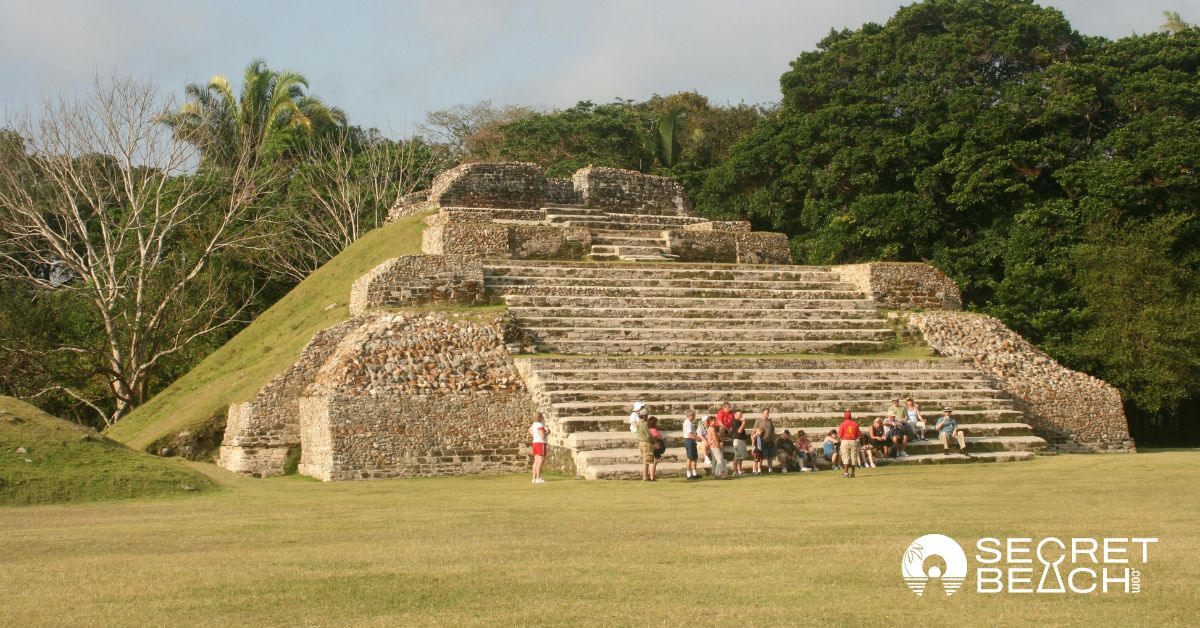
Caves were very important for the ancient Maya. They used them for ceremonies, and some caves in Belize have been found with Maya things like altars, carvings, and even remains of people they sacrificed.
Even today, there are still Maya people living in Belize, especially in the southern part of the country.
History Of Maya Ruins
Belize is a country with a rich and diverse history. One of the most captivating parts of its past is the ruins of the Maya civilization that thrived here for many years, long before European explorers reached these shores.
Today, people from all around the world come to Belize to explore its incredible Maya ruins, each of which has its own unique story to tell from a time long ago. In this blog, we’ll take you on an exciting journey through some of Belize’s most remarkable Maya ruins, uncovering the secrets of this ancient civilization.
The land we now call Belize used to be at the center of the mighty Maya Empire. Although the various regions shared a common language and religion, the empire was made up of a mix of constantly shifting kingdoms and principalities. They sometimes formed alliances, but they also had conflicts and wars. The ancient Maya civilization experienced periods of great growth and prosperity, but there were also times of war, unrest, and even food shortages.
After existing for thousands of years, this civilization began to fall apart for reasons that are still a mystery, somewhere between 600 to 900 A.D. By the time European explorers arrived in the area, the Maya civilization had all but disappeared.
The Mystical City of Caracol
Our adventure begins with a visit to Caracol, one of the largest Mayan ruins cities ever uncovered. Located deep within the Chiquibul Forest Reserve, Caracol offers a unique and immersive experience for history enthusiasts and nature lovers alike. As you trek through the dense rainforest, you’ll encounter howler monkeys, exotic birds, and lush vegetation, creating an atmosphere of mystery and wonder.
Caracol is a really large place with big Mayan temples. If you go there today, you can climb these Maya temples and see the amazing forest around. As it is an active archeological site, there’s still a lot more to discover.
Caracol’s history dates back over 1,400 years and its ancient structures are remarkably well-preserved. The main attraction, the Caana Pyramid, stands as the tallest man-made structure in Belize, reaching a height of 140 feet. While exploring Caracol, you’ll come across intricate stelae and ball courts, providing insights into the Maya’s fascination with astronomy, hieroglyphics, and ball games. Caracol’s grandeur and historical significance make it an essential stop for anyone interested in the ruins of Mayan civilization.
Xunantunich: The Maiden of the Rock
Next on our journey is the captivating site of Xunantunich, known as the “Maiden of the Rock.” Situated near the town of San Ignacio, this Maya ruins is easily accessible and offers a fascinating glimpse into Maya ruins’ culture and architecture. It is an ancient place in Belize that people like to visit. The biggest thing you’ll see there is a tall building called El Castillo, which means “The Castle” in Spanish. It’s more than 130 feet tall, making it one of the tallest buildings in Belize.
A long time ago, Xunantunich was a busy city with around 200,000 people living there. That’s like two-thirds of Belize’s population today. One of the most intriguing aspects of Xunantunich is the mysterious story of the “Stone Woman.” Locals and visitors alike have reported sightings of a ghostly female figure who appears to ascend the pyramid’s steps before vanishing into the stone. They used to call this place something else, but we don’t know the original name anymore. The local Maya people started calling it “Stone Woman” because they thought it was haunted by that ghost woman dressed in white with glowing red eyes. This legend adds an element of mystique to the site, making it a favorite among those interested in the supernatural.
The Maya left this place nearly 1,000 years ago, and the jungle took over. But in the 1890s, archaeologists started digging here. Some parts of Xunantunich are still being studied by archaeologists, but visitors can go to a museum there with cool things to see and do. The main Maya temple is El Castillo, and it’s in the center of everything. It’s really big and has pictures on the outside that tell stories from Maya ruin myths.
When you visit, you can also watch birds or buy crafts made by local Maya people.
Cahal Pech: The Place of Ticks
Cahal Pech used to be a place where important people lived. There are seven plazas and more than 30 buildings there, including Mayan temples, houses, and places to play games. They even found a special tomb with a king inside. He was buried with things he might need in the afterlife, like jewelry, pots, and special tools. The most amazing thing they found was a mask made of jade and shells.Mayan ruins with a rich history.
Its name, which means “Place of Ticks” in the Maya language, may not be the most flattering, but the site itself is a hidden gem.
Cahal Pech was once a Royal palace complex, featuring plazas, temples, and residential buildings. The site’s small size allows for an intimate exploration of the ancient structures, where you can admire intricate carvings and enjoy a peaceful atmosphere.
El Pilar: Where the Maya Legacy Thrives
El Pilar is about 100 acres big and located 12 miles away from a village called Bullet Tree Falls, which is not too far from San Ignacio. The name “El Pilar” might come from the Spanish word for a water basin because there were lots of water sources around.
One interesting thing about El Pilar is that there’s a long path that goes from the ruins into Guatemala. So it’s in two countries! People lived here for a long time, around 500 BC to 1000 AD. They’ve found houses where people lived, fancy houses for important people, and places for special ceremonies.
El Pilar is different from other places nearby because it looks almost the same as when they found it. Many of the buildings are not fully uncovered yet. Right now, there are five paths you can follow at El Pilar. Three are for looking at old stuff, and two are for enjoying nature and seeing how the Maya used to grow their food in the forest.
Altun Ha: The City of Jade
Altun Ha is an ancient Mayan place not far from Belize City. You can see the famous Temple of the Masonry Altars there. When you visit, you’ll learn about how the Maya traded with others a long time ago and discover Belize’s interesting history.
It is located just 31 miles north of Belize City and is a compact yet captivating Mayan ruins site renowned for its discovery of a remarkable jade head representing the Sun God, Kinich Ahau. This invaluable artifact symbolizes the Maya’s advanced craftsmanship and their connection with celestial bodies.
The Temple of the Masonry Altars is the centerpiece of Altun Ha, standing at approximately 54 feet tall. Climbing this Maya temple rewards you with awe-inspiring views of the surrounding savannah and the Caribbean Sea in the distance.
Altun Ha also offers the opportunity to explore the onsite museum, where you can marvel at a collection of artifacts that shed light on the daily life and religious practices of the ancient Maya.
The Enigmatic Lamanai
Lamanai is a special place in northern Belize with old buildings and Mayan temples. It’s near a river called the New River Lagoon, and you can go there on a boat, which is a fun ride through the green forests. When you visit, you might see some animals too!
Lamanai is a Maya ruin city that’s been around for a very long time, more than 3,000 years. They named it “Submerged Crocodile” because there are carvings that look like crocodiles. The most amazing thing is the High Temple, a tall building that’s 108 feet high. When you climb up, you can hear monkeys and see the pretty river and the forest.
Lamanai also has old statues, carvings, and fancy pottery. They even had a place where they played games. It helps us learn about how the Maya people used to live and have fun.
Conclusion
Exploring Belize’s Mayan ruins is a journey through time, unraveling the mysteries of an ancient civilization that thrived in harmony with nature. From the grandeur of Caracol to the mystique of Xunantunich, each site offers a unique glimpse into Maya culture, history, and achievements. Whether it’s the haunting legends of “Stone Woman,” the jade treasures of Altun Ha, or the strategic brilliance of Cahal Pech, these ruins connect us to a vibrant past. Visiting these awe-inspiring sites not only enriches our understanding of the Maya but also deepens our appreciation for Belize’s rich heritage. A trip to these ruins promises adventure, knowledge, and a profound sense of wonder at the enduring legacy of the Maya civilization.
Comment (0)